Everything You Need to Get Your Tiny Home Set Up Right
Site Pad
Tiny Home Positioning
Pier Foundations
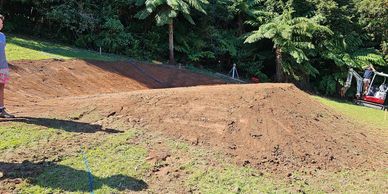
Not every site needs a major excavation like the one shown here — but when it does, we’re equipped to handle it. In many cases, preparing a pad for a tiny home is as simple as scraping off grass and organic material, removing a small amount of topsoil, and lightly cutting into the high side to create a level base. We dispose of any organic waste away from the setup area to ensure a clean, solid foundation for your home. Every site is different, and we’ll always choose the most practical and cost-effective method to get it done right.
Pier Foundations
Tiny Home Positioning
Pier Foundations
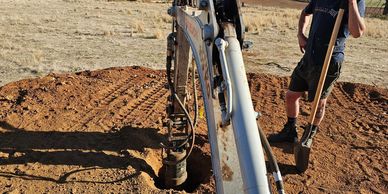
On some sites, especially where there's been excavation or the ground includes fill, foundation footings are needed to properly support heavier tiny homes. In this photo, we’re drilling a pier hole using our excavator to prepare for a concrete footing. Not all sites require this — but when stability matters, especially on sloped or filled ground, this step ensures the piers have a solid, long-lasting base. Pier holes like these are typically filled with concrete to create a strong, level foundation that won't shift over time.
Tiny Home Positioning
Tiny Home Positioning
Tiny Home Positioning
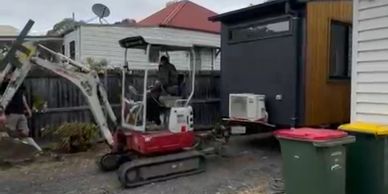
In tight or tricky locations, our excavator becomes the perfect positioning tool. This photo shows it towing a tiny home precisely into place — especially useful when access is limited or when the home needs to line up exactly with pre-dug pier holes. It's ideal for navigating narrow spaces, getting close to fences, or positioning the drawbar where there’s little room to move. With this setup, we can place your tiny home exactly where it needs to be — no winching, no crane hire, and no drama. Just smart, accurate placement using the right gear for the job.
Concrete Block Piers
Concrete Block Piers
Tiny Home Positioning
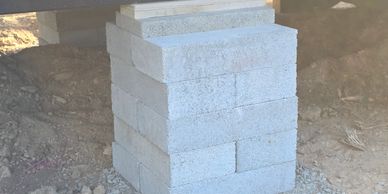
We use solid 390 x 190 x 90mm concrete blocks to build strong, reliable piers under each tiny home. Before placement, we excavate each pier location and remove all organic material to ensure we're building on solid ground — not loose soil or grass. The blocks are set on a firm, compacted base to provide a stable foundation that won’t shift over time. This method is especially important for larger or heavier tiny homes, where proper load-bearing support is essential for long-term performance and safety.
Essential Block Pier
Concrete Block Piers
Essential Block Pier
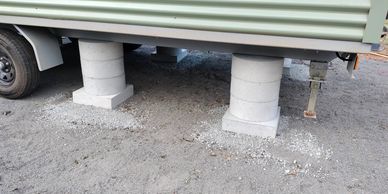
As an alternative to our standard concrete pier blocks, we also offer precast round footing blocks supplied by Essential Concrete Blocks. These heavy-duty, precast concrete cylinders are designed to distribute the load evenly and sit securely on levelled, compacted ground. Their shape and weight make them a solid option for supporting tiny homes, especially on firm, relatively flat sites.
These blocks come ready to go — saving time on-site — and are particularly useful where a clean, consistent footing is preferred. We can advise on whether this option is suitable for your site during the consultation or quoting stage.
Ground Anchors
Concrete Block Piers
Essential Block Pier
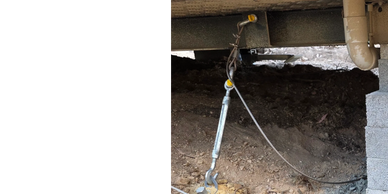
To ensure your tiny home stays exactly where it should, we offer ground anchor tie-downs using the GroundGrabba Pro II — a high-strength ground anchor system designed by an Australian company for securing structures on soft to medium ground. These anchors are installed to prevent the home from shifting off its pier blocks and to minimise movement or wobble, especially in strong winds.
One of the best features of this system is that the anchors are reusable. When it’s time to relocate your tiny home, they can be reversed out and reinstalled at your new site. It’s a reliable, long-term solution for securing your home — without the need for concrete or permanent foundations.
Stabiliser Leg Installation

We can set up your tiny home using the original factory stabiliser legs, as long as both you and the manufacturer are comfortable with that option. While these legs offer a quick and inexpensive setup, they can sometimes result in minor movement or wobble, especially in strong winds or when walking through the home.
If stability is a concern, we’re happy to talk you through other support options, like concrete block piers or ground anchors. We always follow the manufacturer’s recommendations and work with you to find the best solution for your site and setup.
Modular Decks and Stairs

We offer pre-built decks and stairs, available together or separately. Each is constructed at our yard, painted in Night Sky Black, and finished with ModWood composite decking in dark grey — a durable, low-maintenance choice.
Decks are built in modular sections with removable boards, making them easy to transport, disassemble, and reinstall when relocating your tiny home.
Note:
– The photo shown includes skirting, which is optional and not included as standard.
– Decks must be installed on a level site and kept under 1 metre in height to avoid the need for a balustrade (not included).
Water Tanks
We supply and install water tanks as part of a complete site setup. We can create a level pad for the tank, connect downpipes from your tiny home roof, and run poly pipe from the tank outlet to your water pump location. Whether it's a basic setup or something more involved, we offer practical water storage solutions tailored to your site. If you're unsure what you need, we’re happy to help plan the best system for your layout and water use.
Long Distance Water Line Installation
Long Distance Water Line Installation
We offer trenching services to lay poly pipe water lines to your tiny home from almost any source — whether it's a header tank, main house, shed, or a water tank positioned by the road for easy truck refilling. Trenches are typically dug to around 200mm depth in paddock settings, and the pipe is backfilled with the original material. This setup is ideal for getting reliable water supply across longer distances, no matter how your site is laid out.
Greywater Trench Installation
Long Distance Water Line Installation
Greywater Trench Installation
We install greywater trench systems designed to safely disperse wastewater from your bath, vanity, and kitchen sink — once it's passed through a grease trap. These systems are not for black water or toilet waste. The greywater is directed through a 45L grease trap, then into a trench system built to absorb the water into the surrounding ground.
Each trench includes an inspection point for easy access and maintenance, and is constructed using quality materials and proper drainage fill. It’s a simple, effective solution for off-grid greywater management — especially where council approval isn’t required. If you're unsure what’s suitable for your site, we can walk you through the options during a consultation.
Gray Water Diversion System
Long Distance Water Line Installation
Greywater Trench Installation
For clients who want to make use of their greywater, we also offer a Grey Flow diverter system. This unit includes a 100-watt pump that redirects greywater for subsurface irrigation, allowing you to reuse it to water lawn or garden areas safely and efficiently. It’s a great way to reduce waste and improve sustainability, especially in off-grid setups.
Compost Toilets
Vegetation Mulching and Site Clearing
Cinderella Toilet Flue Installation
We install compost toilet systems with underfloor chambers, venting, and safe waste management — typically using systems supplied by the customer. The chamber is positioned below the tiny home, and we install a vent pipe that extends above the roofline to allow airflow and control odour.
A small blackwater absorption trench is also created to manage liquid discharge from the chamber, keeping the system safe and low maintenance. We take care of the full setup — including chamber placement, trench excavation, and vent pipe installation — to ensure your compost toilet is functional, hygienic, and compliant with off-grid living needs.
Cinderella Toilet Flue Installation
Vegetation Mulching and Site Clearing
Cinderella Toilet Flue Installation
We install vent systems for Cinderella incinerator toilets, ensuring proper airflow and safe operation. These vents are essential for the performance of the unit, and we take care to position and secure them correctly according to manufacturer specifications. While these vents typically come in a silver finish, we can custom paint them to better suit your setup — like this one, which has been sprayed in black for a cleaner, more discreet look.
Vegetation Mulching and Site Clearing
Vegetation Mulching and Site Clearing
Vegetation Mulching and Site Clearing
We offer vegetation mulching to help clear and prepare your site for tiny home delivery and installation. Whether it’s long grass, scrub, or light regrowth, we can mulch it down quickly to make way for access, positioning, and setup. We can bring our mulching equipment with us on install day, or come ahead of time to get the site ready. It’s a fast, efficient way to tidy up your block and create a safe, workable area for your tiny home — without burning off or leaving big piles of green waste behind.